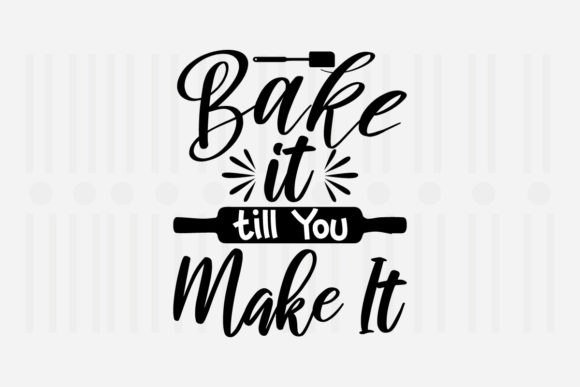
Bake It Till You Make It Kitchen Svg Review
As a designer who spends half my life staring at stitch maps and the other half trying to explain to clients why their favorite font doesn’t digitize well, I approach every new machine embroidery design with a healthy dose of skepticism. The market is flooded with generic quotes that look charming in a digital preview but fall apart under the needle. However, when I first pulled up the file for the "Bake It Till You Make It" kitchen SVG, I stopped scrolling. This isn’t just another clip-art phrase; it has a specific rhythm and visual weight that suggests it was built with practical application in mind.
This review dives into how this embroidery file performs in real-world scenarios, from high-volume Etsy listings to delicate baby gifts. We will look at its aesthetic appeal, technical viability, and where it fits best in your craft business or personal project library.
First Impressions: Mood and Visual Personality
The phrase "Bake It Till You Make It" carries an immediate sense of warmth and humor. It speaks directly to the chaotic reality of home cooking, making it instantly relatable. Visually, the design strikes a balance between playful and professional. It avoids the overly cutesy script fonts that often struggle with readability in small hoop sizes, opting instead for a layout that feels grounded.
In terms of visual personality, this design feels like it belongs in a modern farmhouse kitchen or a trendy boutique bakery. It creates a mood that is inviting rather than loud. For a handmade product seller, this is crucial. You want items that customers feel comfortable displaying in their homes, not just wearing once and hiding away. The quote’s universal appeal means it transcends niche audiences, appealing to anyone who enjoys the process of creating something delicious, even if they aren't a professional chef.
Real-World Application: Where Does This Design Shine?
When evaluating any graphics asset for embroidery, I always ask: "What is the end user actually going to do with this?" Based on the structure of the "Bake It Till You Make It" design, here are the most effective applications I’ve identified.
Kitchen Textiles and Home Decor
The most natural fit for this embroidery project is obviously kitchen-related textiles. I envision this looking stunning on a heavy-duty cotton canvas apron. The contrast of a dark thread on a light apron, or a vibrant red against navy, would make the quote pop without overwhelming the garment. Similarly, tea towels and flour sack towels provide a large, flat surface area that allows the full text to breathe. Unlike a cap brim, where space is limited, these items allow you to showcase the entire message clearly.
Another strong candidate is pillow covers. A throw pillow featuring this quote adds a touch of personality to a breakfast nook or a dining room bench. It serves as a conversation starter, which is exactly what Etsy sellers look for when optimizing their listings for engagement.
Custom Apparel and Gifts
While the theme is culinary, the design works surprisingly well on apparel. A crewneck sweatshirt or a high-quality t-shirt can carry this graphic effectively. For a personalized gift, this design is perfect for housewarming presents, bridal showers for brides who love to cook, or Christmas stockings for the family member who insists on making everything from scratch.
I also see potential in custom apparel for small bakeries or food trucks. If a local business owner wants branded merch that feels approachable rather than corporate, this design offers a friendly, human touch that aligns with artisanal branding.
Technical Considerations and Stitch Quality
From a technical standpoint, the success of any digital embroidery file relies on how well it handles different fabric types and stitch densities. The "Bake It Till You Make It" design appears to be optimized for clarity, but there are nuances to consider.
- Stitch Density: Ensure the fill stitches are not too dense. Overly dense stitching can cause puckering, especially on lighter fabrics like tea towels or thin cotton blends. If the design uses heavy fill, you may need to adjust the density settings in your digitizing software before hooping.
- Satin Stitch vs. Fill Stitch: If the lettering relies heavily on satin stitches for outlines, check the length of the runs. Long satin stitches can lead to thread breaks or a less crisp edge. Ideally, the design should use a combination of satin stitch for clean edges and fill stitch for internal details to maintain structural integrity.
- Thread Colors: One of the strengths of this source file eps or svg is its color changeability. In embroidery, contrast is king. On dark fabrics, you will need light, high-contrast threads (like cream or gold) to ensure readability. On light fabrics, darker threads provide better definition. Always test your thread colors on scrap fabric that matches your final product.
Where to Use With Caution
Not every surface is created equal. While this design is versatile, there are specific scenarios where it might not perform as expected.
Avoid placing this design on highly textured fabrics, such as chunky knits or bouclé. The uneven surface will distort the running stitch and fill stitch patterns, leading to a messy finish. Similarly, stretchy fabrics like jersey knit require a heavy stabilizer to prevent distortion during stitching. If you attempt this on a stretchy material without proper support, the hoop marks may remain visible after washing.
Small hoop sizes are another constraint. If you try to scale this design down too much for a tiny patch or a baby onesie chest print, the smaller letters may become illegible. Embroidery machines have a minimum stitch length; if the letters are too small, the machine may skip stitches, resulting in gaps. Always confirm the hoop size requirements before committing to a small product.
Practical Designer Notes for Success
To get the best results from this embroidery design, follow these practical steps before starting your production run:
- Test on Scrap Fabric: Never go straight to the final product. Run the design on a piece of scrap fabric using the same thread and stabilizer you plan to use. This helps you identify tension issues or color clashes early.
- Check Stabilizer Compatibility: Use a cut-away stabilizer for garments that will be worn frequently and washed often. For temporary projects like tea towels, a tear-away might suffice, but cut-away ensures longevity.
- Review in Black and White: Convert your mockup to black and white to check contrast levels. If the design looks muddy in grayscale, it will likely look muddy in color as well.
- Confirm Licensing: Before selling finished items or using this in commercial embroidery projects, verify the licensing terms of the source file. Some SVGs are for personal use only, while others allow commercial resale. Protect your small shop product line by ensuring you have the right permissions.
Final Verdict
The "Bake It Till You Make It" kitchen SVG is a solid addition to any designer’s toolkit. It balances humor with elegance, making it suitable for a wide range of finished products. Whether you are creating a tote bag design for a craft fair or a sweatshirt embroidery for a boutique client, this design offers the versatility and visual appeal needed to drive sales.
It is particularly well-suited for holiday embroidery seasons, where gift-giving is at its peak. By paying attention to fabric choice, stabilizer usage, and thread contrast, you can transform this simple vector into a high-value handmade product that customers will cherish. For craft business owners looking to expand their catalog with reliable, evergreen designs, this is a smart investment.